
A customer in Clearwater searches for a plumber. Someone in St. Pete needs an accountant. A Tampa family is deciding where to eat tonight.
Before they call, visit, or place an order, they're probably checking what other customers have said.
Reviews are not just a marketing task. They are part of your sales process, customer service, and day-to-day operations. A steady stream of honest reviews can help new customers feel confident. A pattern of unanswered complaints can make them move on — sometimes without ever contacting you.
The good news is that reputation management does not require a complicated software stack or another task for you to remember at 10 PM. It starts with a few simple process improvements.
Here are seven common review mistakes, and practical ways to fix them.
Mistake 1: You ask for reviews inconsistently
Many small businesses ask for reviews only when someone remembers.
A team member has a great customer interaction, so they send a request. A week later, everyone gets busy. Then a negative review appears, and suddenly reviews become urgent again.
This creates an uneven customer experience and an uneven review flow. You may receive several requests in one burst, then none for weeks. Customers who would have happily shared their experience simply never get asked.
How to fix it
Build the request into the normal customer journey.
For a trades or home-services business, that might be after the job is completed and the customer has confirmed everything looks good. For a restaurant, it could be after a completed catering order. For a professional-services firm, it may be after a milestone or successful project handoff.
Choose one trigger and one simple message. Then make sure every appropriate customer receives it.
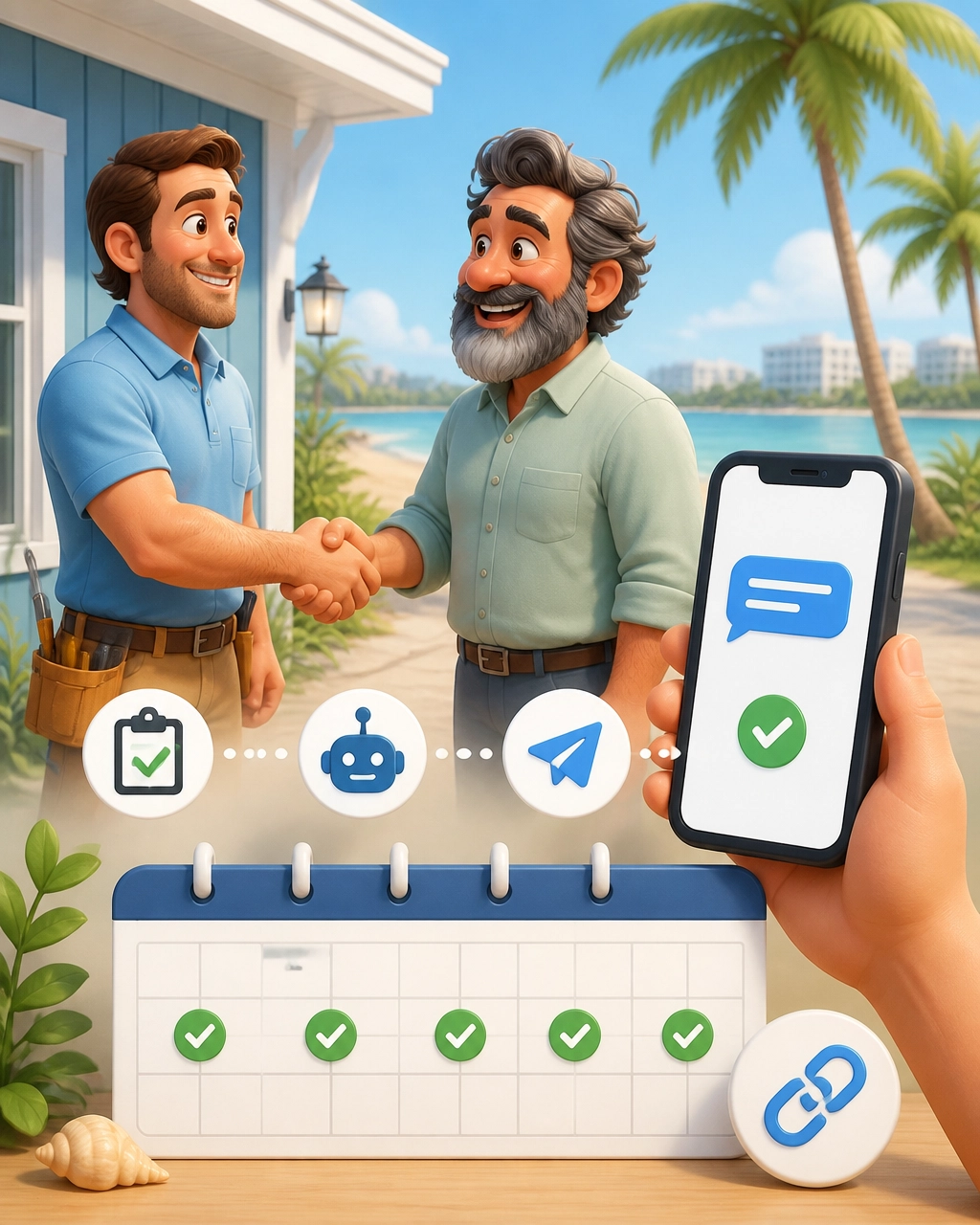
The process might be:
- Job or purchase is marked complete.
- Customer receives a thank-you message.
- Review request is sent at the right time.
- A reminder is sent once if there is no response.
- The result is recorded in your customer system.
The goal is not to pressure people. It is to make a genuine request consistently. Google's review policy allows businesses to ask for honest feedback, but prohibits incentives, fake reviews, and selectively soliciting only positive reviews. Read Google's policy on fake and misleading reviews.
Mistake 2: You make customers hunt for the review link
"Please leave us a review on Google" sounds easy. In practice, it asks the customer to search for your business, find the correct listing, open the review area, and figure out what to do next.
Most people will not take those extra steps. They are busy. They may be standing in a driveway, walking out of your store, or getting back to work.
How to fix it
Send a direct link to the correct review page.
Put that link in the message your customer already receives: such as a text, email, receipt follow-up, or appointment-completion message. Keep the wording short and clear:
Thanks for choosing us today. If you have a minute, we'd appreciate an honest review: [review link]
Do not bury the link under a long paragraph about your company. Do not send customers to a page with five different choices. Reduce the number of clicks between "I'm willing to help" and "the review is submitted."
As part of the cleanup, confirm that the link works on a phone. A link that works for you on a desktop may still create friction for a customer using a mobile device.
Mistake 3: Your responses sound generic
"Thank you for your review. We appreciate your business."
There is nothing wrong with being polite. The problem is using the same sentence for every customer, whether they praised your fast response, complimented a specific employee, or mentioned a problem with billing.
Generic responses look automated — and they miss an opportunity to show future customers how your business operates.
How to fix it
Personalize the response with one specific detail from the review.
For a positive review:
Thanks, Maria. We're glad the air-conditioning repair was completed before the weekend heat arrived. We appreciate you calling us in Clearwater.
For a negative review:
We're sorry the appointment window created a problem for you. That is not the experience we want. We're reviewing what happened and would appreciate the chance to speak with you directly.
Keep the response professional and avoid discussing private customer details in public. If the situation needs more explanation, invite the customer to continue by phone or email.
The public response is not only for the person who wrote the review. It is also for the next customer reading it. They are looking for signs that you listen, take responsibility, and treat people fairly.
Mistake 4: You ignore the reviews you already have
Some owners focus so heavily on getting new reviews that they overlook the ones already sitting on their profile.
An unanswered review from three months ago is still visible. So is a question about pricing, a compliment about a team member, or a complaint that no one followed up on.
Ignoring existing reviews can make your business appear inactive or indifferent, even when your actual service is good.
How to fix it
Set a recurring review check.
For many small businesses, checking once or twice a week is a reasonable starting point. Higher-volume businesses may need daily monitoring. The important part is assigning responsibility.
Create a simple routine:
- Check Google Business Profile and other priority platforms.
- Respond to new reviews.
- Flag reviews that may violate platform rules.
- Escalate service issues to the right person.
- Record complaints that may point to a larger pattern.
Do not wait until a review becomes a crisis. A calm, timely response is easier to write than a defensive reply created in the middle of a busy day.
Mistake 5: You rely only on Google
Google should usually be a priority for a local business. It affects what people see when they search for your company or look for a nearby service in Clearwater, Tampa, St. Pete, or elsewhere in Pinellas County.
But it may not be the only place your customers look.
Depending on your industry, customers may also check Facebook, Yelp, TripAdvisor, an industry directory, or a professional marketplace. A restaurant and a home-services contractor do not necessarily need the same review strategy.
How to fix it
Treat Google as your hub, then identify the one to three other platforms that actually matter to your customers.
You do not need to create a profile on every review site. That often creates more work and more places to forget. Instead, ask:
- Where do our customers discover us?
- Where have people already left reviews?
- Which platform appears when prospects search our name?
- Which sites influence referrals in our industry?
Prioritize the platforms customers use, monitor them consistently, and keep your business information accurate across each one.
Mistake 6: You fail to track recurring complaints
A review that says "the technician was late" may be an isolated issue. Five reviews mentioning late arrivals over two months is a process problem.
The same applies to complaints about confusing invoices, slow callbacks, poor communication, long waits, or inconsistent product quality. If each review is handled separately, the business may apologize repeatedly without fixing the cause.
How to fix it
Create a basic complaint log. It can live in your CRM, a shared spreadsheet, or another system your team will actually use.
Track:
- Date and source of the review
- Main issue
- Customer or job category
- Team member or process involved
- Action taken
- Whether the issue repeated
Review the log monthly. Look for themes, not isolated criticism.
If customers repeatedly mention slow estimates, improve the quoting handoff. If they mention missed calls, review your lead-response process. If restaurant guests consistently mention wait times, examine staffing and order flow.
Reviews become far more valuable when they help you improve the experience that creates future reviews.

Mistake 7: You treat reputation as just a star rating
A five-star average is useful, but it does not tell the whole story.
Customers also notice how recent the reviews are, whether the comments sound genuine, how the owner responds, and whether people mention the things that matter to them: clear communication, reliable arrival times, friendly staff, clean facilities, or quality work.
A business with a slightly lower rating but thoughtful responses and recent, detailed reviews may appear more trustworthy than a business with a higher rating and no visible engagement.
How to fix it
Track reputation as a customer-experience signal, not just a number.
Pay attention to:
- Review volume and recency
- Common compliments
- Repeated complaints
- Response time
- Unanswered questions
- Customer sentiment by location, service, or team
- Whether review feedback leads to operational changes
Your best reviews can also show you what to reinforce. If customers repeatedly praise your communication, make that part of your sales message. If they mention a helpful employee, recognize and learn from that behavior.
A simple review workflow beats another complicated tool
Most review problems are not caused by a lack of software. They are caused by unclear ownership and disconnected steps.
A practical workflow might connect:
- Your CRM or customer list
- Job, appointment, or order completion
- A direct review link
- Scheduled reminders
- Review monitoring
- Complaint tracking
- Monthly process review
AI can help draft a response, summarize recurring themes, or remind your team about follow-up. It should not invent customer experiences, post fake reviews, or replace judgment in sensitive situations.
The right starting point is not buying another reputation platform. It is identifying where the current process breaks.
GreyBeardOps starts with a Business Checkup to map what is happening now: where customer information lives, how follow-up is handled, who owns review requests, and where complaints disappear. From there, the fix may be as simple as cleaning up your CRM, creating a few reminders, or connecting tools you already pay for.
If a larger automation would genuinely save time, I can build it. If a checklist is enough, I'll say so.
You can start the free GreyBeardOps Business Checkup or learn more about the 90-minute Business Checkup and implementation support. For practical tools and shortcuts, visit the GreyBeardOps Toolkit.
Your reputation is built one customer interaction at a time. A better system simply makes sure the good work you're already doing does not go unnoticed — and that repeated problems get fixed before another customer walks away.
Where is your review process breaking?
The free GreyBeardOps Business Checkup takes about 3 minutes and shows you exactly where your business is leaking time, leads, or trust — including the review requests that never get sent and the complaints that quietly cost you the next customer.
Run the Free Checkup →